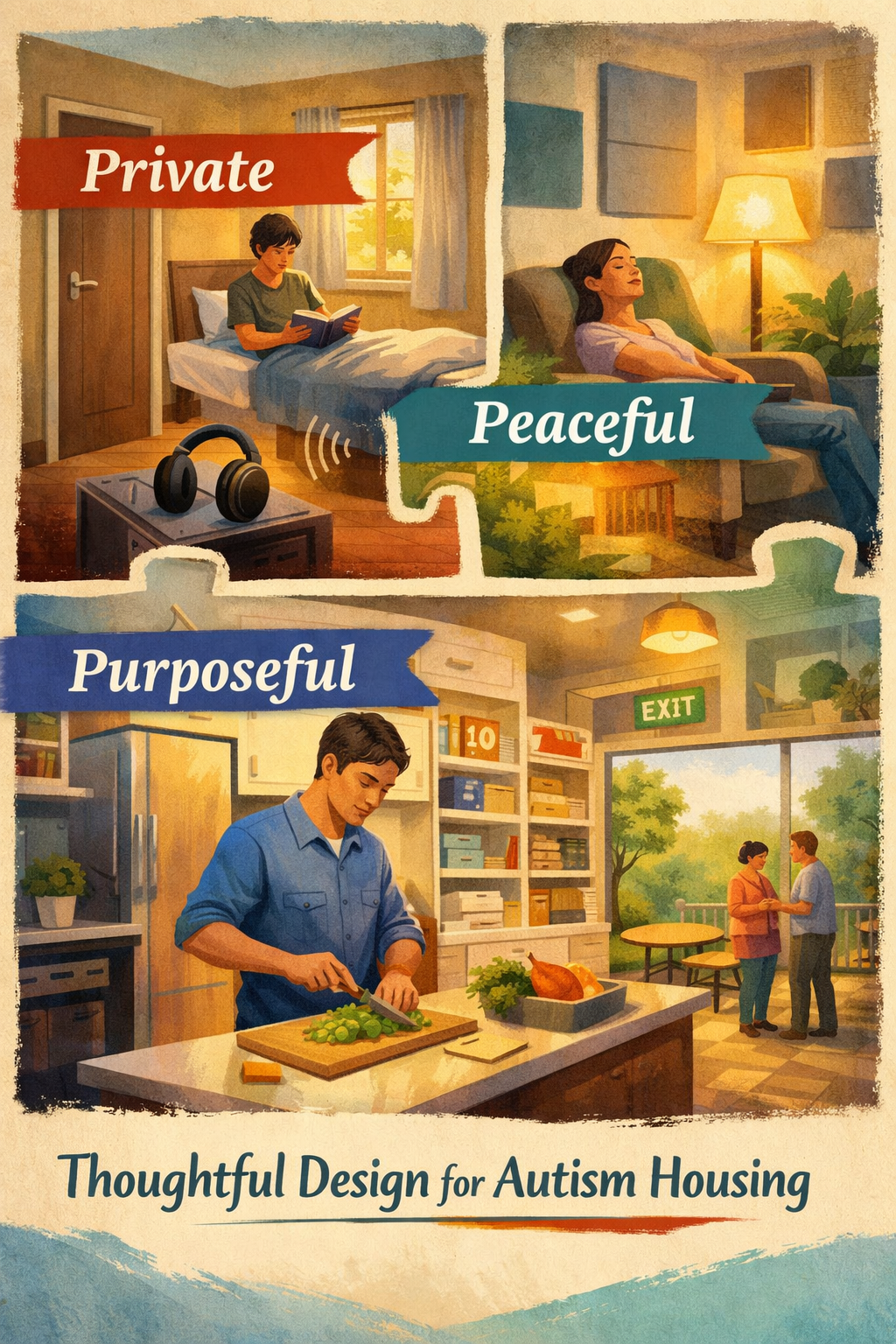
For adults with autism, housing is more than a place to sleep. It is the foundation for independence, regulation, dignity, and growth. Thoughtful design is not a luxury, it is essential.
Privacy is powerful. Many autistic adults need predictable personal space to decompress and regulate sensory input. Private bedrooms, sound-insulated walls, and clearly defined personal areas reduce anxiety and prevent unnecessary conflict. When someone knows they have a secure retreat, the entire home feels safer.
Peaceful environments also matter. Lighting that avoids harsh fluorescents, neutral color palettes, soft-close cabinets, and acoustic treatments can dramatically reduce sensory overload. Even small details, like minimizing echo in hallways or choosing low-hum HVAC systems, support nervous system regulation. Calm spaces create calmer days.
Purposeful design fosters independence. Clear visual cues, organized storage, labeled spaces, and intuitive layouts help residents navigate their environment confidently. Kitchens designed with safety features and simple sight lines encourage participation in meal preparation. Shared areas arranged to invite connection allow for social interaction on comfortable terms.
Autism housing should never feel institutional. It should feel like home- warm, respectful, and empowering. When architects, providers, and families prioritize design details, they send a clear message: adults with autism deserve environments built for their strengths and needs.
Private. Peaceful. Purposeful. Design is not decoration. It is support in physical form, and it changes lives.