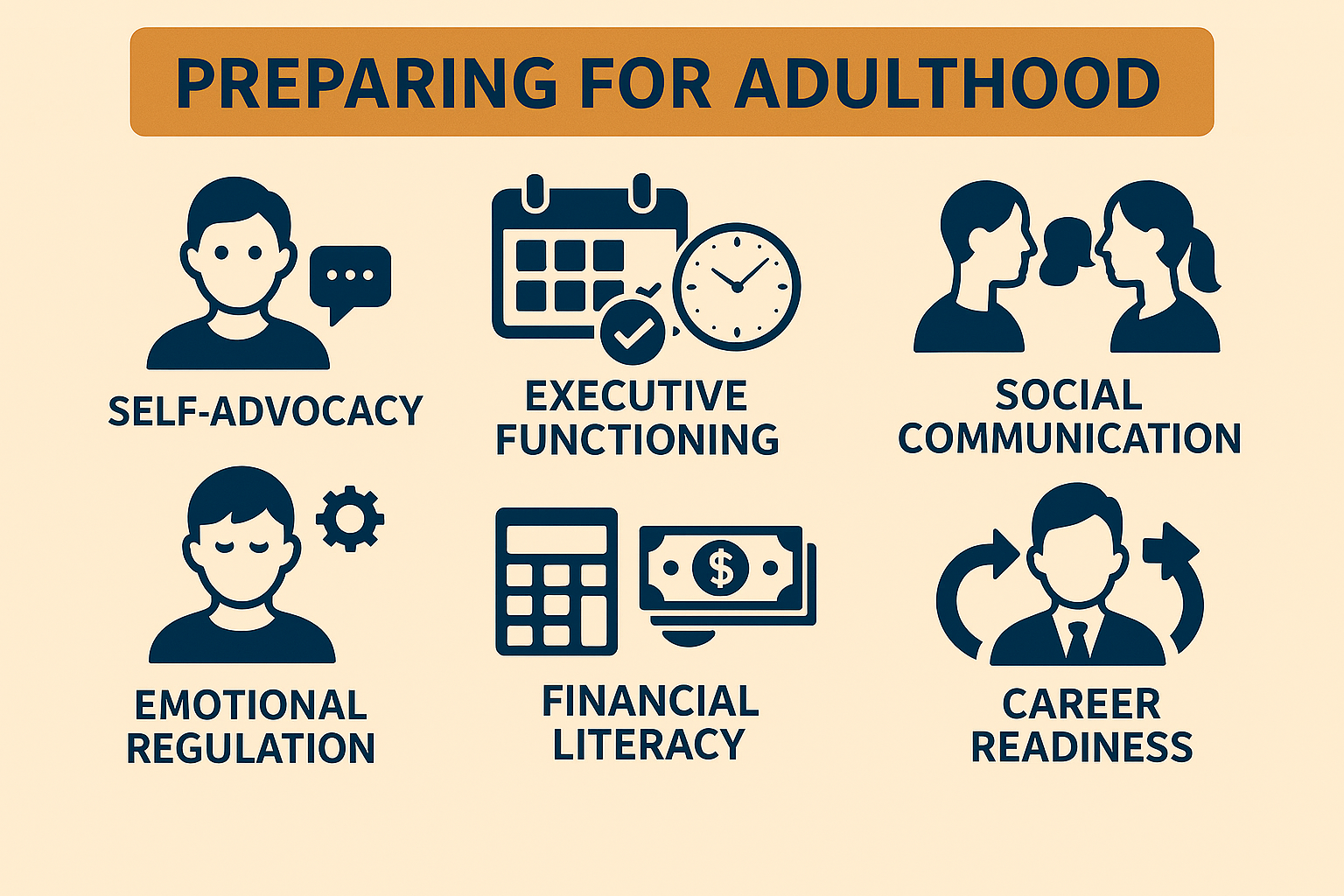
Transitioning from school to adulthood can feel overwhelming, especially for individuals on the autism spectrum. Success isn’t just about academics, it’s about building practical, social, and emotional skills that empower independence and confidence. So, what matters most?
1. Self-Advocacy Learning to express needs and preferences is crucial. Whether it’s requesting accommodations at work or communicating boundaries in relationships, self-advocacy fosters autonomy.
2. Executive Functioning Planning, time management, and organization are key for handling responsibilities like jobs, college, or daily routines. Tools like planners, apps, and visual schedules can make a big difference.
3. Social Communication Navigating conversations, understanding social cues, and practicing workplace etiquette help build meaningful connections. Role-playing and social scripts can ease anxiety in unfamiliar settings.
4. Emotional Regulation Life after school brings stress. Coping strategies such as deep breathing, mindfulness, or sensory breaks support resilience and mental health.
5. Financial Literacy Budgeting, saving, and understanding bills are essential for independence. Start small: track expenses, learn about banking, and practice decision-making.
6. Daily Living Skills Cooking, cleaning, and personal care aren’t just chores, they’re confidence boosters. Gradual practice builds competence and reduces overwhelm.
7. Career Readiness Explore strengths and interests early. Internships, volunteering, and vocational training provide real-world experience and help identify fulfilling paths.
Preparing for adulthood is a journey, not a race. With the right skills and support, individuals on the spectrum can thrive in work, relationships, and life. Start today. Small steps lead to big wins!