So-called "behavioral episodes" or “meltdowns” in autistic individuals are not behavioral problems at all. They are nervous system crises; full-body responses to sensory environments that are simply incompatible with how that person's brain is wired.
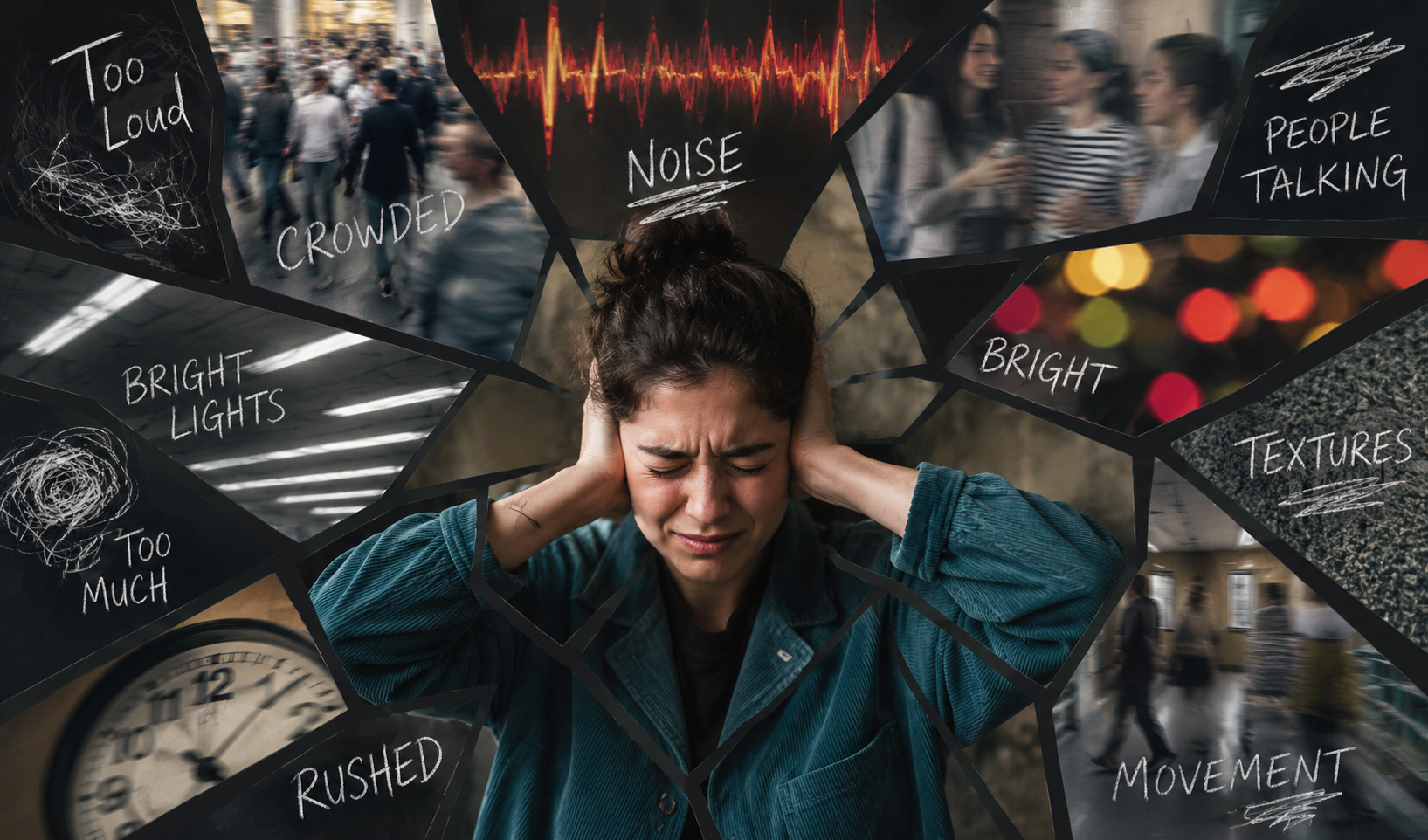
Loud spaces, bright lights, unexpected touch, and crowded rooms aren't minor annoyances. For many autistic people, they are overwhelming threats to the nervous system. Sensory overload doesn't just feel uncomfortable. It can completely impair communication, reasoning, emotional regulation, and motor control.
Sensory overload doesn’t have a specific “look”. For some autistic individuals it may simply appear that they are frozen in place. For others there may be yelling, hair pulling, hitting, or total loss of communication. Again, this is not a behavioral problem, it is the body’s response to overwhelming stimuli.
As long as the person is not hurting themselves or anyone else, give them the space to do what their body needs. Try to eliminate stimuli where possible, using headphones, sunglasses, fidgets, and other sensory items, to help the nervous system calm down and regulate.
Far too many systems like schools and therapies respond with punishment, restraint, compliance demands, or behavioral tracking. Why? Because acknowledging neurological distress requires individualized support. And that takes more effort than labeling it misconduct and moving on. Systems are designed to alter behavior, not identify the cause.
The result is families are left trying to protect their children from environments that are fundamentally harmful to their nervous systems, fighting against systems that should be fighting alongside them. This isn't a niche issue, it's a systemic failure with real consequences for people, every single day.
It’s time to build sensory-informed schools, therapies, housing, and workplaces. Stop forcing autistic individuals to endlessly adapt to environments that cause them harm. The environment should change, not the person.
If you have someone in your life that experiences sensory overload, do you have any other tips you can share?
#JoyDew #SensoryOverload #AutisticCommunity #SensoryProcessing #EducationAndAdvocacy