Neurodiversity has quickly moved from the margins to the mainstream, but in many organizations, it still lives more in conversation than in operations. The problem isn’t intent, it’s design.
Most organizations try to fit neurodivergent people into systems that were never built for them. That’s not inclusion, it’s adaptation. And it’s why results fall short.
The real shift is moving from programs to infrastructure. That means building programs and employment experiences around neurodivergent strengths from the start…integrating employment and community into one cohesive system. When those things work together people don't just participate, they belong. And belonging is where business value emerges.
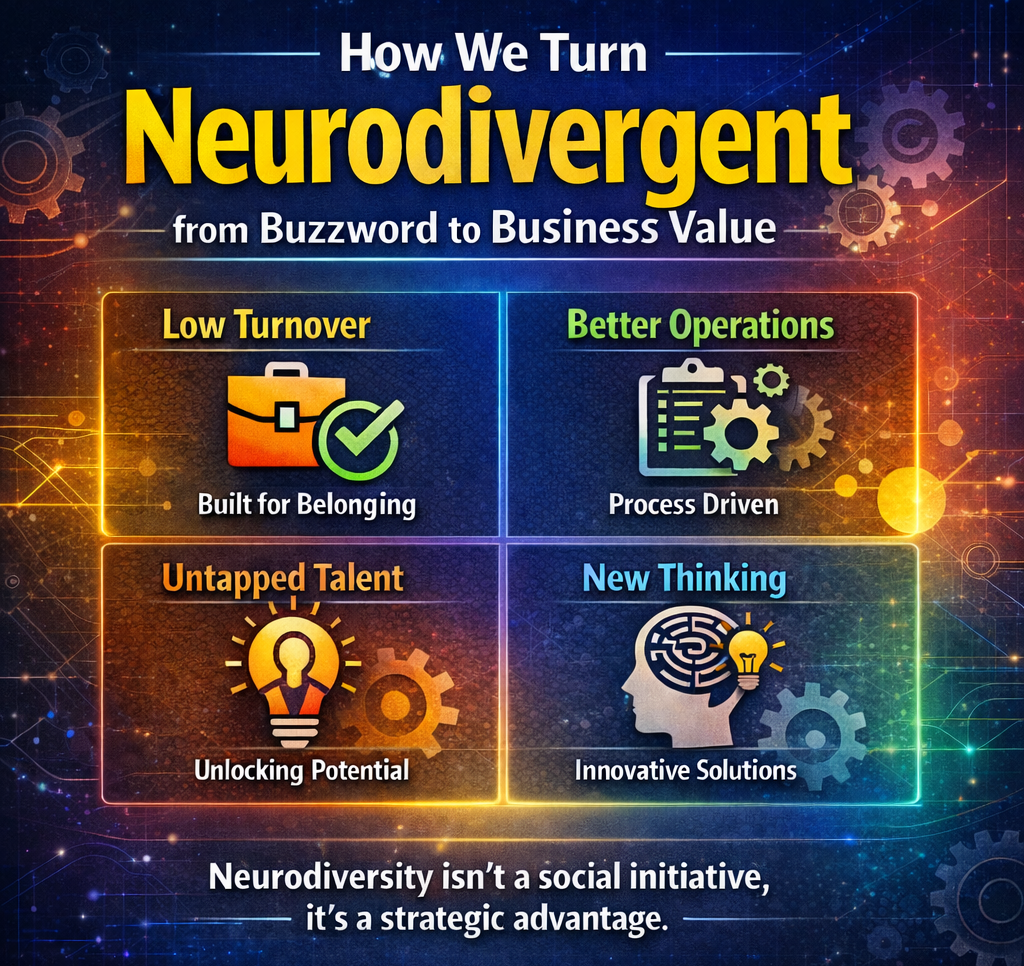
Low turnover. When neurodivergent employees move through environments built around their rhythms - workplaces that don't punish difference, communities that reinforce - they stay. Structured, strengths-based environments increase retention and reduce hiring costs.
Better operations. Neurodivergent teams don't just adapt to process; they drive it. Processes get written down, refined, and stress tested. The operational discipline organizations spend years trying to install emerges naturally when the environment rewards precision.
Untapped talent. There is a large, overlooked workforce that becomes fully accessible when systems align with how people think, not how they mask or learned to approximate. That alignment is a competitive advantage.
New thinking. Different cognitive styles don't just add diversity to a team; they change how problems get solved. Strength-based roles, clear workflows, and intentional design don't just support neurodivergent employees, they build conditions for genuine innovation.
Neurodiversity isn’t a social initiative, it’s a strategic advantage.