Expressive communication is how a person shares their inner world, and sharing our thoughts, needs, feelings, and ideas with others is a basic human need. Yet countless non-speaking or minimally speaking autistic adults spend years without access to tools or systems that allow them to fully express themselves, and people often assume incorrectly that they are unable to hear, think, feel, understand, or learn.
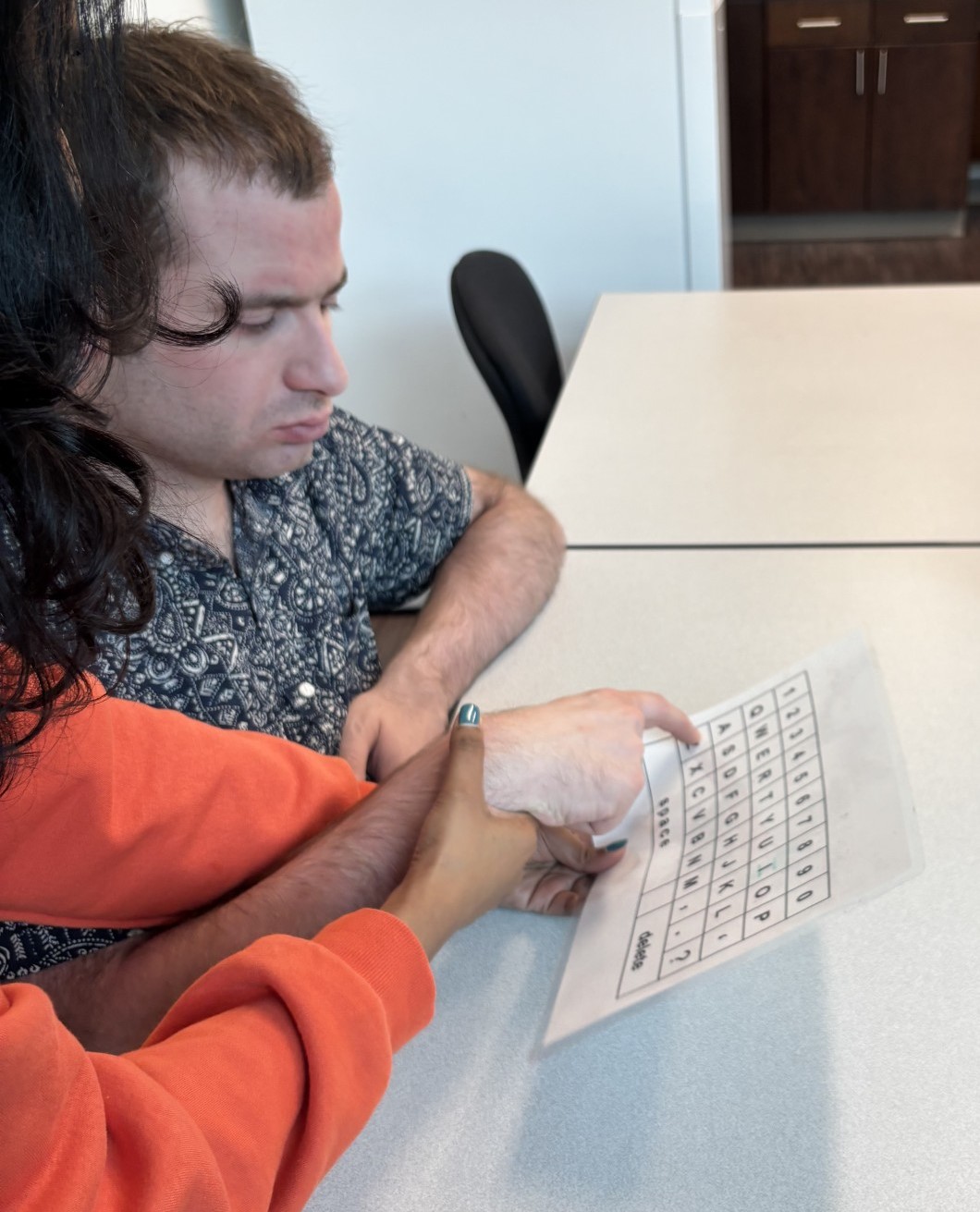
People on the spectrum with communication differences often have access to only basic output communication methods such closed-ended (yes/no) or essential communication for simple exchanges for immediate needs (health, safety, comfort). When they finally have access to assisted typing, AAC devices, ASL, letterboards, or other alternative systems, they are often not used to discussing their thoughts. It can take encouragement, asking follow-up questions, and doing exercises like writing short blogs, poems, etc. to build up the skill to express themselves.
Too often, communication challenges are mistaken for intellectual delays. Because traditional assessments rely heavily on spoken responses, many non-speaking autistic adults are inaccurately labeled as having low cognitive ability. But when given access to the appropriate tools, many reveal advanced comprehension, strong opinions, and deep insight. Their intelligence was never missing, the opportunity to express it was.
Exploring different communication options, partnering with professionals who genuinely believe in your adult child’s potential, and practicing consistently can open doors that once felt impossible. A reliable communication method empowers autistic adults to participate in decision-making, advocate for themselves, build relationships, and engage in learning that reflects their true abilities.
With a dependable voice, frustration decreases, confidence grows, and independence becomes achievable. Learn more.