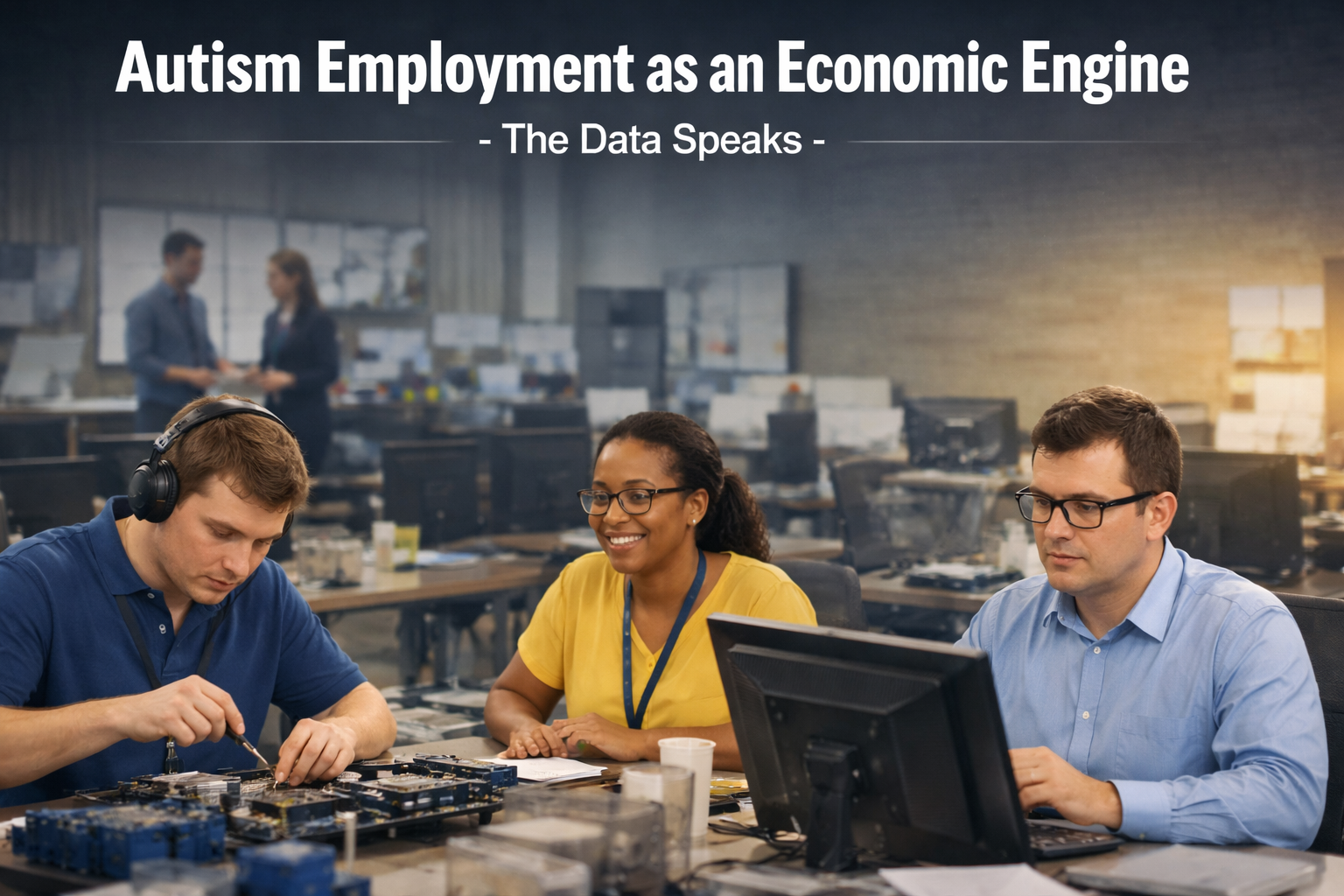
Autism employment is often framed as a charity initiative, but the numbers say it's a missed business opportunity.
Here's what the research shows:
J.P. Morgan Chase found that autistic employees were up to 48% faster and 92% more productive than their neurotypical peers. That's not a feel-good statistic; it's a competitive advantage sitting largely untapped.
Ernst and Young’s 2025 Global Neuroinclusion at Work Study shows the benefits of neurodiversity: when truly included, autistic professionals are up to 31% more proficient than their neurotypical peers in the fast-growing skills like AI and cybersecurity.
SAP's Autism at Work program, launched in 2013, reports a 90% retention rate among autistic hires- far outpacing industry averages. Lower turnover alone translates directly to reduced recruiting and training costs.
The macro-economic cost is staggering. Closing the employment gap for the autistic community could boost U.S. GDP by up to $25 billion.
And yet, an estimated 85% of autistic adults in the U.S. remain unemployed. Let that sink in. A population with documented strengths in focus, pattern recognition, accuracy, and systems thinking - sidelined, largely due to hiring processes built around neurotypical norms.
The barrier isn't talent. It's process. Traditional interviews screen for charisma, not capability. Small adjustments - skills-based assessments, structured onboarding, and flexible communication norms unlock this potential without significant cost.
The data isn't asking companies to do the right thing. It's asking them to do the smart thing.
The engine is there. We just need to turn the key.