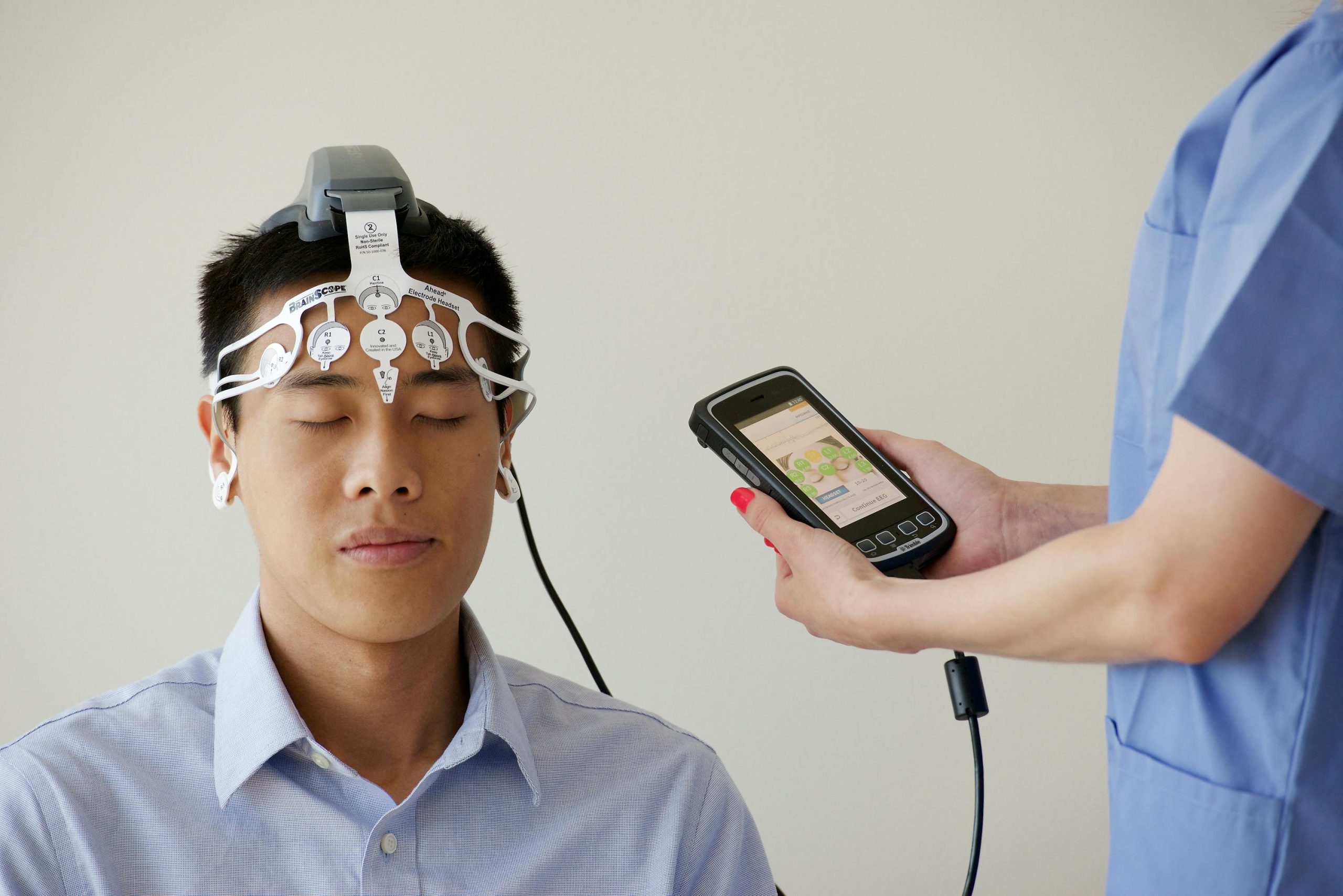
For decades the conversation around non-speaking autistic individuals has been shaped by the painful assumption that limited speech equals limited thought. AAC is challenging that assumption… and proving it false. The incorporation of tech – an ever-evolving industry – has provided significant advances in communication. One upcoming advance is brain-computer interfaces (BCIs) and it may be the future for some non-speaking autistic individuals.
BCIs work by translating neural signals, the brain's electrical activity, into communicable output. While the technology has historically been explored for conditions like ALS or paralysis, some researchers are now turning attention to non-speaking autistic individuals, a population whose communication needs have long been underserved by existing assistive technology.
The implications are significant. Many non-speaking autistic people have rich inner lives, complex preferences, and things they urgently want to express. Augmentative and Alternative Communication (AAC) devices have helped, but they still require motor coordination and sustained attention that can be difficult for some. BCIs, particularly non-invasive EEG-based systems, could offer a more direct path from thought to expression.
Early research shows promise. Studies have demonstrated that individuals can modulate their brain signals to make binary choices or navigate communication boards without speaking or pointing. Companies like Roshan Labs are designing their product specifically to provide speech to individuals with speech disorders, especially non-speaking autistic individuals. For families and individuals who have spent years navigating a world not built for them, that's not a small thing.
The goal isn’t to "fix" non-speaking autistic individuals, it’s to give them tools to be heard on their own terms.