When we talk about autism meltdowns or behaviors, we often default to trying to “manage the situation” which is stressful for everyone. Instead, take a step back and focus on trying to understand what’s being communicated.
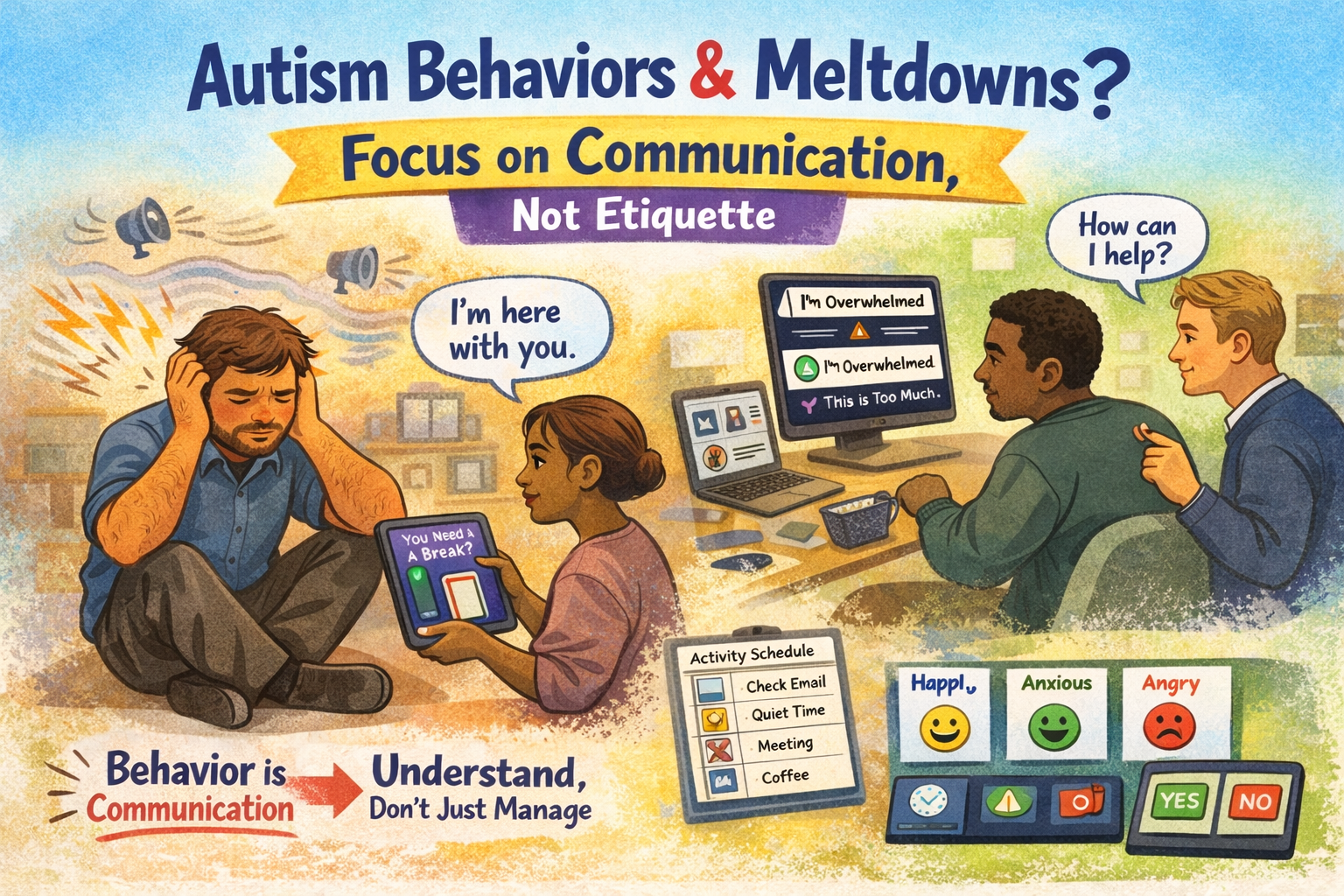
Meltdowns are not misbehavior; they’re a response to sensory overload, physical discomfort, confusion, and fear. For many autistic individuals, especially those with limited verbal communication, behavior is communication. The question shifts from “How do we stop this?” to “What is this person trying to tell us?”
Communication tools can make all the difference. Visual supports like schedules, choice boards, or emotion charts help reduce uncertainty and give individuals a way to express needs before distress escalates. Augmentative and Alternative Communication (AAC), whether through apps, devices, or picture systems, can empower someone to say “I need space” or “this is too loud” before reaching a breaking point.
Also important is co-regulation. Instead of demanding compliance during a meltdown, offer presence and predictability. Use simple, consistent language. Reduce sensory input where possible. Sometimes giving space is support, sometimes simply being a calm presence is support.
Behaviors are data. Patterns often emerge: certain environments, transitions, sensory inputs, or unmet needs. When we track and listen, we can proactively adjust supports - making communication easier and meltdowns less frequent over time.
This isn’t about etiquette or surface-level fixes. It’s about access. When we prioritize communication, we’re not just reducing distress, we’re honoring autonomy and dignity.
Let’s move beyond managing behavior to understanding behavior. Communication goes beyond vocalization and it’s time we learn to listen with more than just our ears.