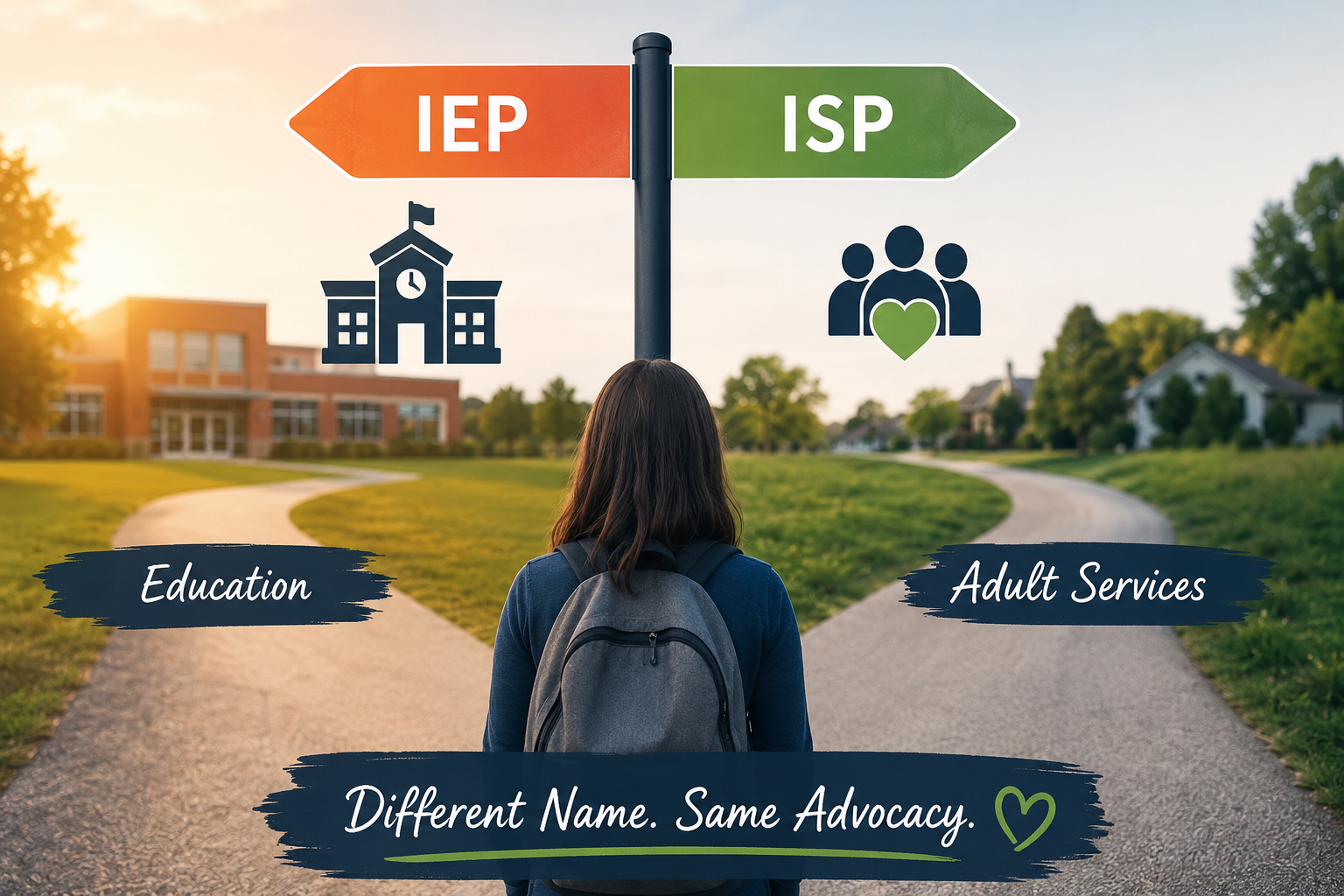
The acronyms change. The challenge doesn't.
An IEP (Individualized Education Program) is the backbone of a child's education; federally protected under IDEA, enforceable through due process, built around measurable goals tied to academic and developmental progress. An ISP (Individual Service Plan) governs adult life, funded through Medicaid waivers or state disability agencies, coordinated by a case manager, and is less protected by law. One is a mandated requirement. The other is a plan contingent on funding, waitlists, and eligibility.
Knowing the difference is step one. Knowing how to work each system is what gets your child, or yourself, what's needed.
For an IEP: come with data, not just concerns. Document specific examples of struggle; a meltdown after masking all day, motor planning issues mistaken for noncompliance. Request evaluations in writing. Ask for goals that are measurable, not vague ("will use coping strategies" means nothing without context). You can request an IEP meeting anytime, not just annually.
For an ISP: start as early as possible, before age 21. Ask directly what waiver services exist in your state and what the waitlist timeline looks like. Bring your own documentation; case managers are handling large caseloads and can't advocate as strongly as a parent can. Push for specificity in the plan itself: hours of support and named providers, not just categories of service.
Both systems reward the same thing: precise language, written requests, and refusing to accept vague promises as a plan.
Different name. Same advocacy muscle.
#JoyDew #IEP #ISP #AutismLife #AutismSupport #21Cliff