Speech is a form of communication, but communication encompasses more than speech. Speech is motor output. Communication is the expression of thought. They are not interchangeable words, and assuming they are has led to a serious problem…mistaking communication barriers for cognitive limitations.
A person who cannot speak can still think.
“I have autism and communicate by typing. The issue is people think that not speaking is not understanding. Many people don’t know the difference. But these are two very different things. I am smart and yes I understand when people talk to me.” -Mark, a non-speaking adult with autism
Many non-speaking autistic individuals understand language, process complex ideas, and carry rich inner thoughts that systems rarely bother to uncover. The obstacle is not what is happening inside their minds, it’s that the tools to let that out have been withheld, dismissed, or never offered.
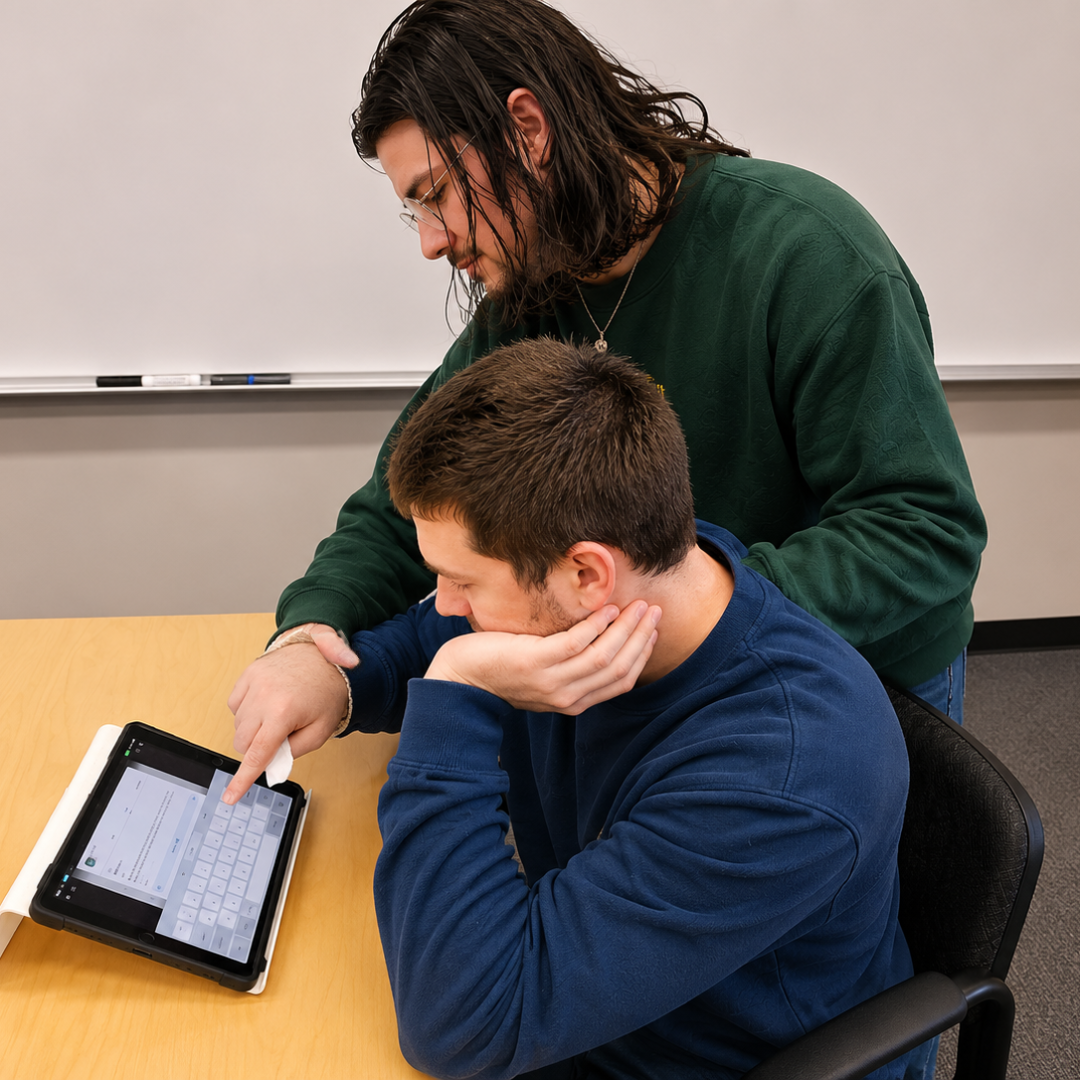
Today, facilitated, Spelling to Communicate (S2C), and other alternative communication users are actively challenging assumptions; demonstrating that when access is provided, intelligence and clear communication emerge. Yet families continue to be steered away from these methods, told they lack mainstream validation, and pushed back toward approaches that treat spoken word as the only legitimate output.
That bias has real consequences. When no speech is read as no thought, when no output is read as no comprehension, we design systems that fail people before they ever have a chance to be heard.
Presume competence. Expand access. Diversify communication tools. The real issue has never been a lack of intelligence; it has always been a lack of access. Every non-speaking person deserves a genuine pathway to be heard.
How do the non-speakers in your life communicate?