JoyDew is seeking a Principal Investigator to explore if autistic visual strengths can transform breast cancer prescreening.
Neuroscience is catching up to what many in the autism community have long known: autistic individuals frequently outperform neurotypical peers on visual search, detail discrimination, and anomaly detection. The Enhanced Perceptual Functioning model suggests that autistic cognition processes visual information from the bottom up, picking up fine-grained detail. The result: faster, more accurate detection of subtle irregularities in complex visual fields.
We put this to the test.
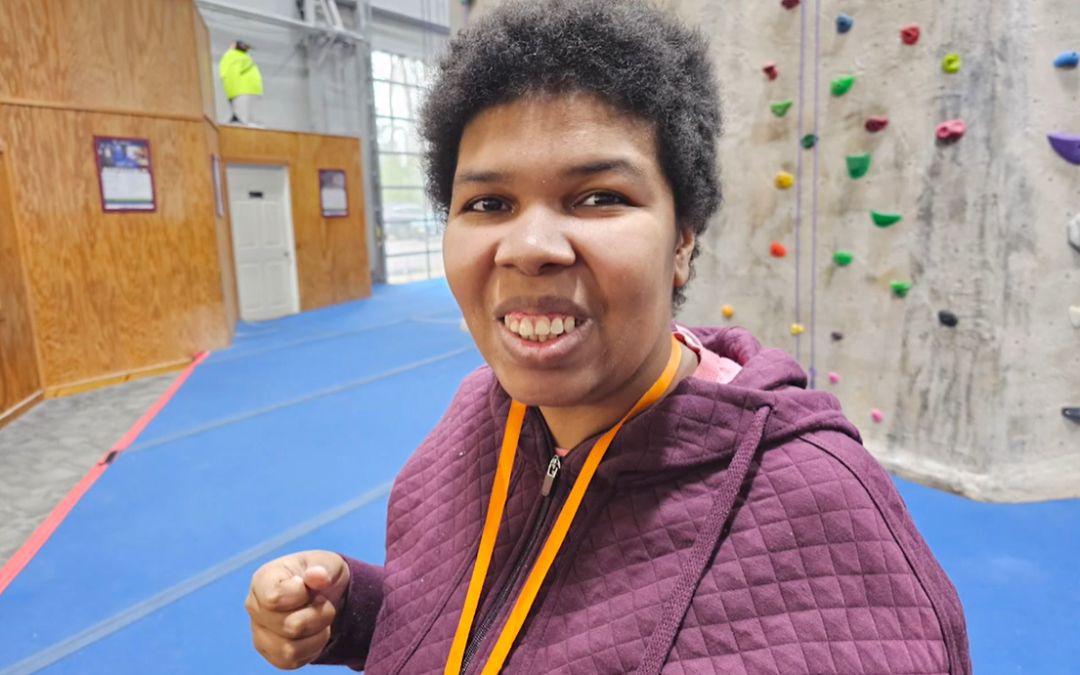
Working alongside military analysts, autistic young adults in JoyDew's program scanned aerial imagery for hidden weapons, vehicle bombs, and visual anomalies. They achieved approximately 3× the productivity and 4× the accuracy of traditional teams.
So here's the question we're now asking: what else could they find?
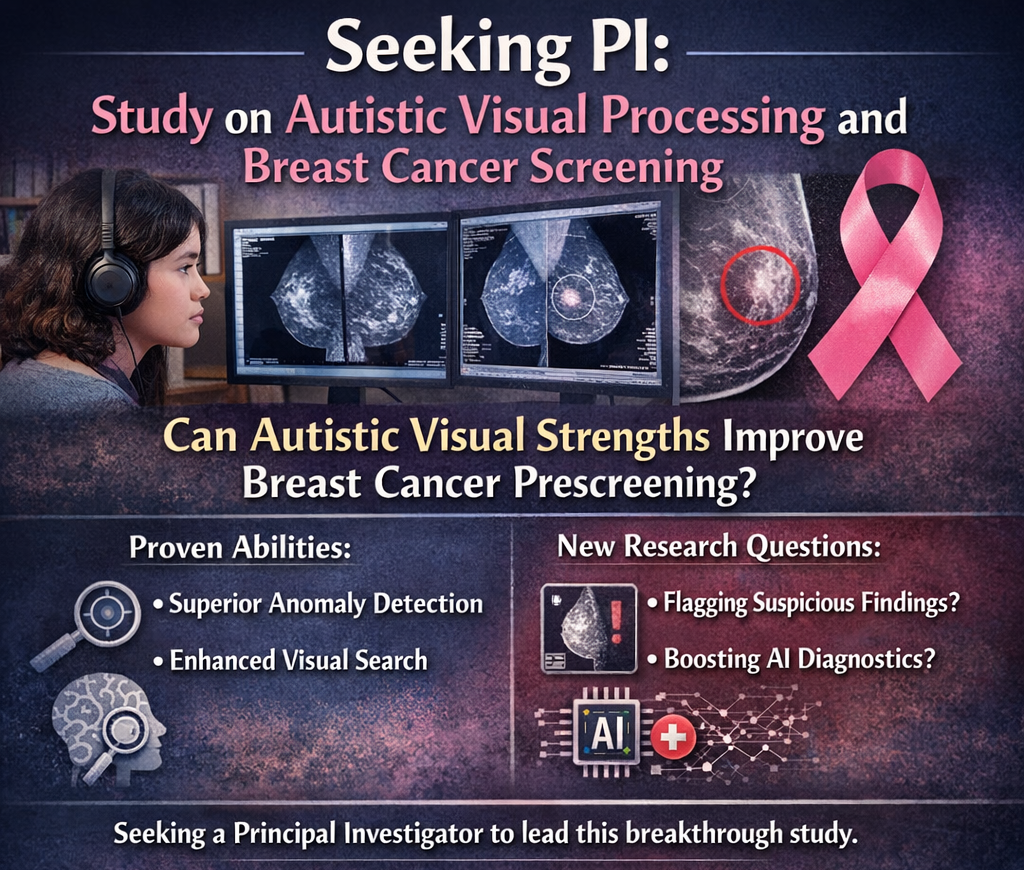
Mammography prescreening demands exactly the kind of visual processing where autistic cognition excels - scanning for subtle density shifts, microcalcifications, and architectural anomalies. Radiology's false-negative problem is perceptual and there may be a population uniquely equipped to solve it.
We previously partnered with a university radiology department to pilot this concept using de-identified breast imaging studies. While early results were promising, the project was paused due to administrative changes unrelated to the research.
We are now seeking a PI to continue or replicate this work. Key research questions include:
• Can autistic visual processing improve prescreening workflows by flagging suspicious findings?
• Can it support high-precision labeling to strengthen AI diagnostic tools?
There is strong interest in this concept within the radiology community, including potential publication opportunities.
If you are interested in advancing this research, please contact karen@joydew.com.