For too long, adults labeled as “severely” or “profoundly” autistic have been underestimated and defined not by their potential, but by their challenges with communication. These labels often lead to a harmful and persistent assumption: that limited speech equals limited intelligence. In reality, this couldn’t be further from the truth.
Many autistic adults who are non-speaking or minimally speaking possess rich inner worlds, complex thoughts, and deep understanding. The barrier is not cognition, it is expression. When someone cannot reliably communicate their ideas, preferences, or knowledge, the outside world too often assumes those things do not exist. This misunderstanding leads to missed opportunities, low expectations, and a lifetime of being overlooked.
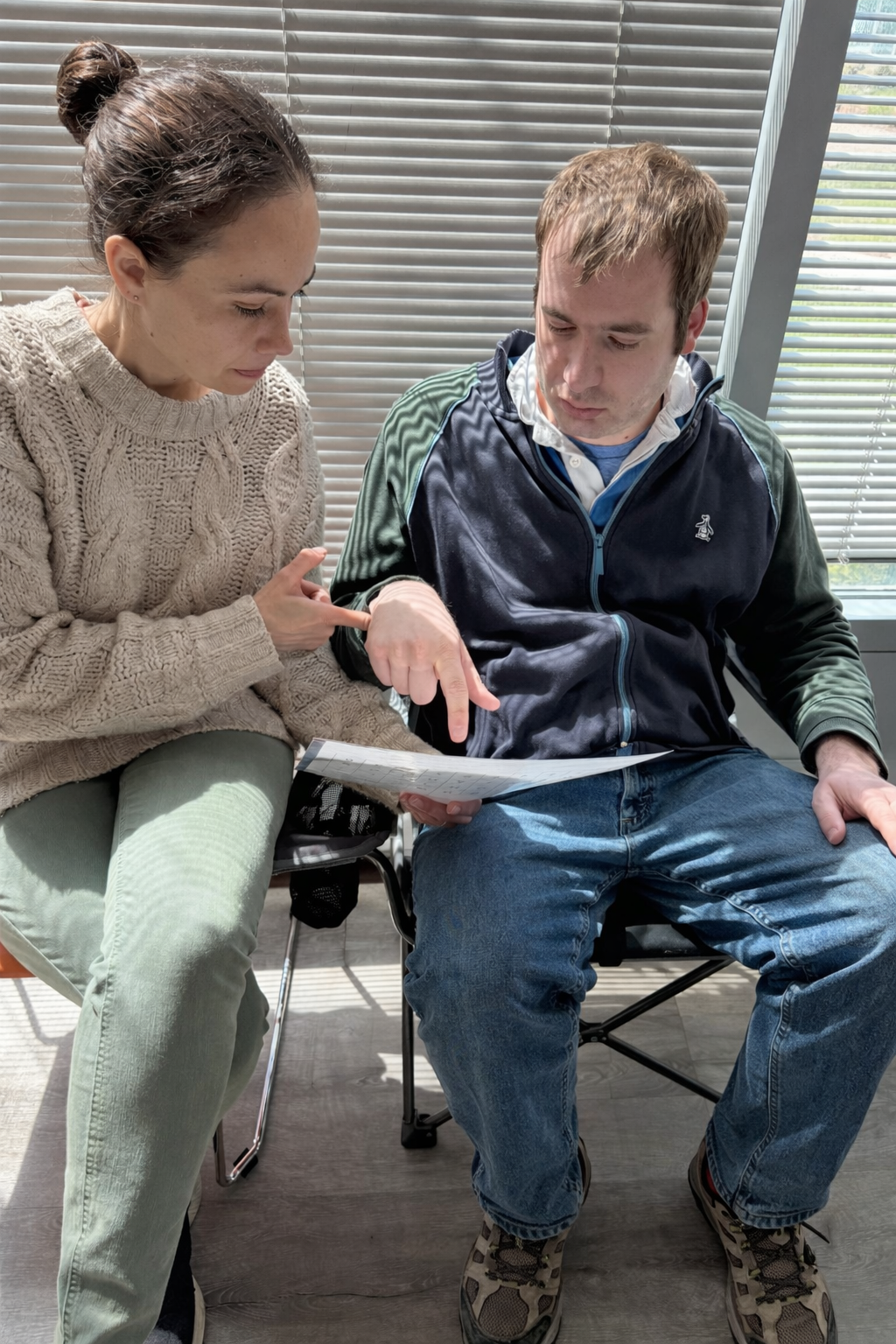
Communication is more than speech. It includes typing, pointing, gestures, assistive technology, ASL, and supported communication methods. When individuals are given access to the right tools and, more importantly, patient and skilled support, something powerful happens: their intelligence becomes visible. Their personalities emerge. Their autonomy grows.
Expressive communication is not a luxury; it is the foundation of independence, dignity, and success. Without it, even the most capable individuals remain trapped, unable to fully participate in their own lives. With it, doors open: relationships deepen, employment becomes possible, and self-advocacy takes root.
That’s why programs like JoyDew prioritize communication in everything they do. Rather than focusing solely on behavior or basic skills, they recognize that the ability to express thoughts is the key that unlocks all other growth. Staff are trained to presume competence, to listen beyond words, and to create environments where every individual has a voice…whether spoken or not.
Intelligence does not disappear because speech is absent. When we invest in communication, we reveal the true capabilities that have been there all along.