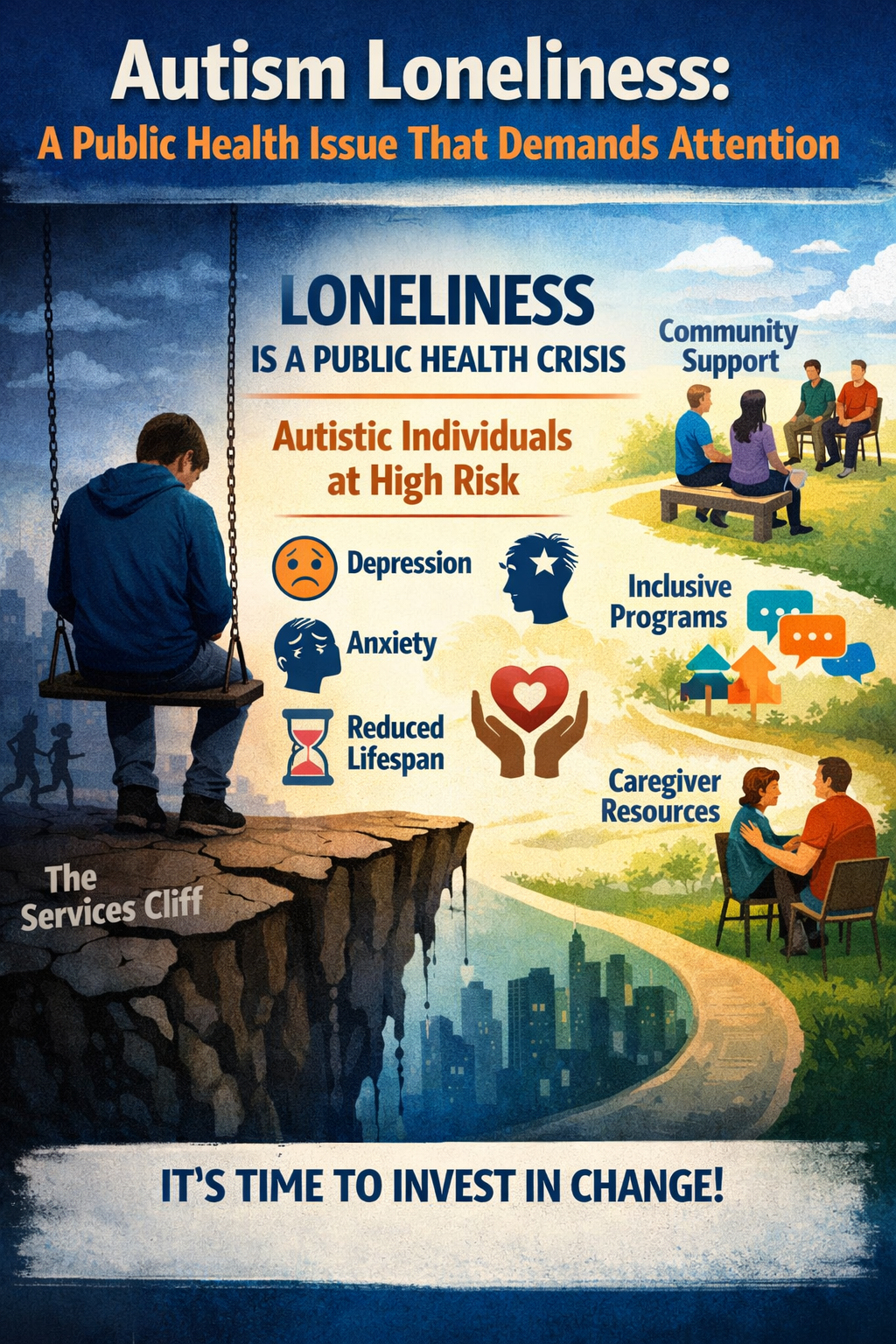
Loneliness is a public health crisis. But within that crisis lives a quieter, largely unaddressed emergency: the profound social isolation experienced by autistic individuals across every age group. Roughly 1 in 31 children in the United States are diagnosed with autism spectrum disorder - a number that has grown steadily. Yet the systems built to support these individuals largely stop at childhood. As autistic people reach adulthood, structured programming falls away, peer networks thin, and social connection becomes harder sustain. The "services cliff" is real, and millions of families are navigating it with little guidance and fewer resources. The consequences are measurable. Autistic adults report some of the highest rates of loneliness of any population studied. That isolation correlates directly with elevated rates of anxiety, depression, and reduced life expectancy. This is not a niche problem, it is a systemic gap in how we design communities, technology, and care infrastructure. This services gap is finally attracting the attention it deserves, and the solutions emerging are genuinely promising. Innovators are building meaningful pathways to connection through specialized platforms, community-based programming, and caregiver support tools that meet autistic individuals where they are. Policy momentum is accelerating, and a growing movement of autistic self-advocates is reshaping the conversation, but funding is the missing link. This is the moment for social impact funders to invest.
What We’ve Learned at JoyDew: What if our autistic adults aren’t the ones who need to change?
If you’re the parent of an adult with autism, you may have spent years hearing about what your child couldn’t do. Couldn’t communicate well enough. Couldn’t work. Couldn’t be independent. Couldn’t make their own...