ADULT AUTISM PROGRAMS · RIDGEWOOD & LIVINGSTON, NJ
Non-speaking / Communication Challenges?
You are not alone! 80% of people with autism communicate differently.
JoyDew is the expert in helping adults with autism to expressively communicate.
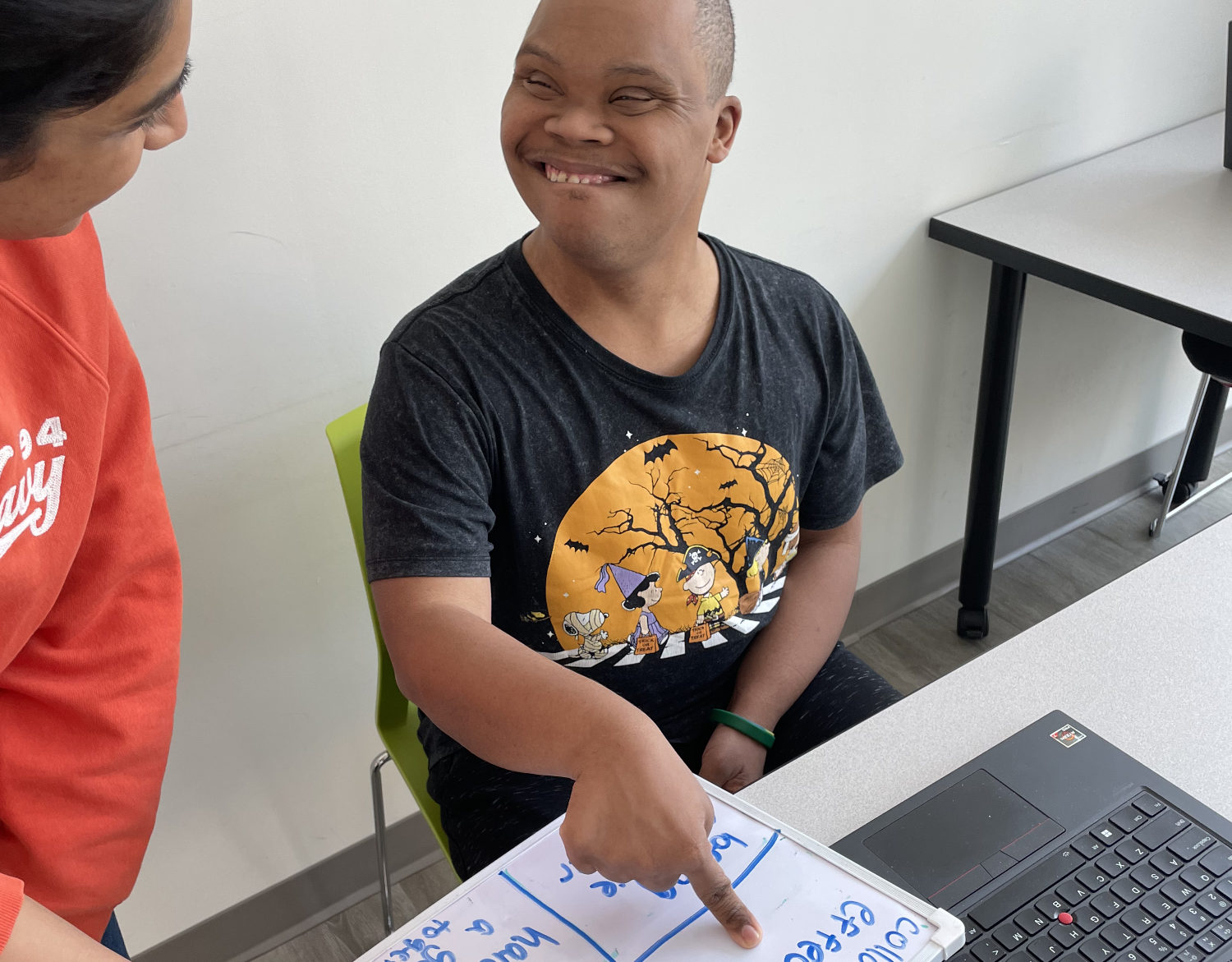
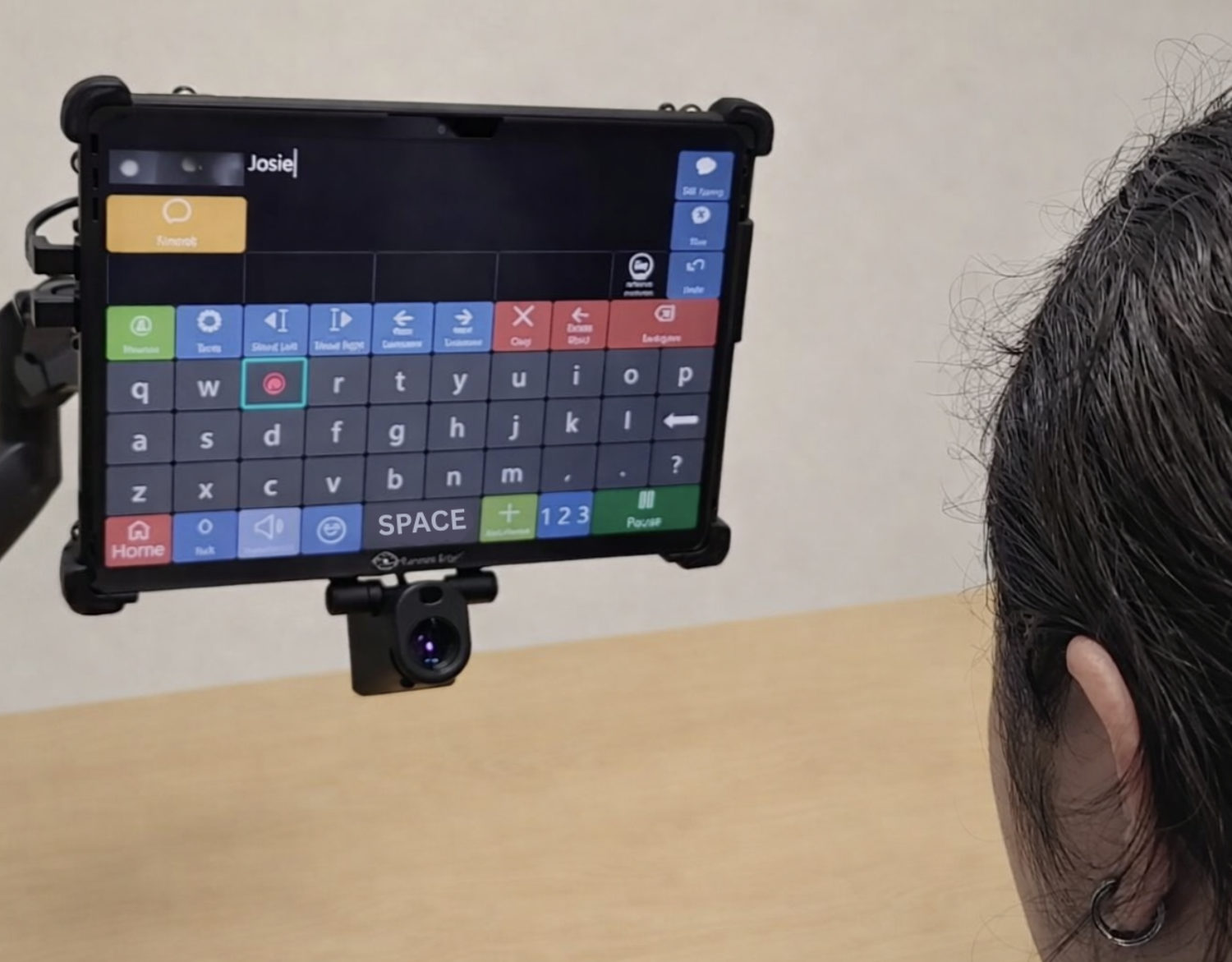
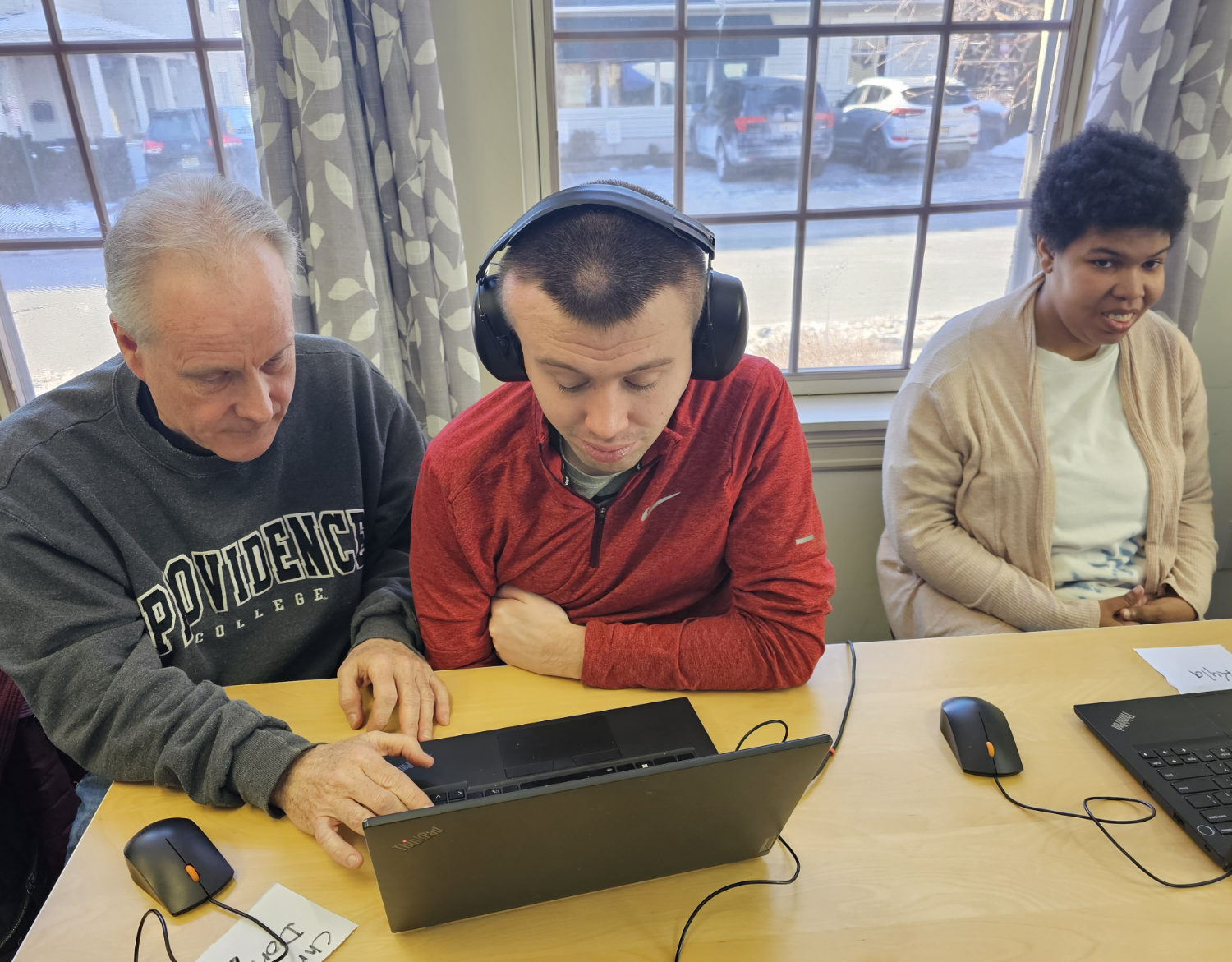
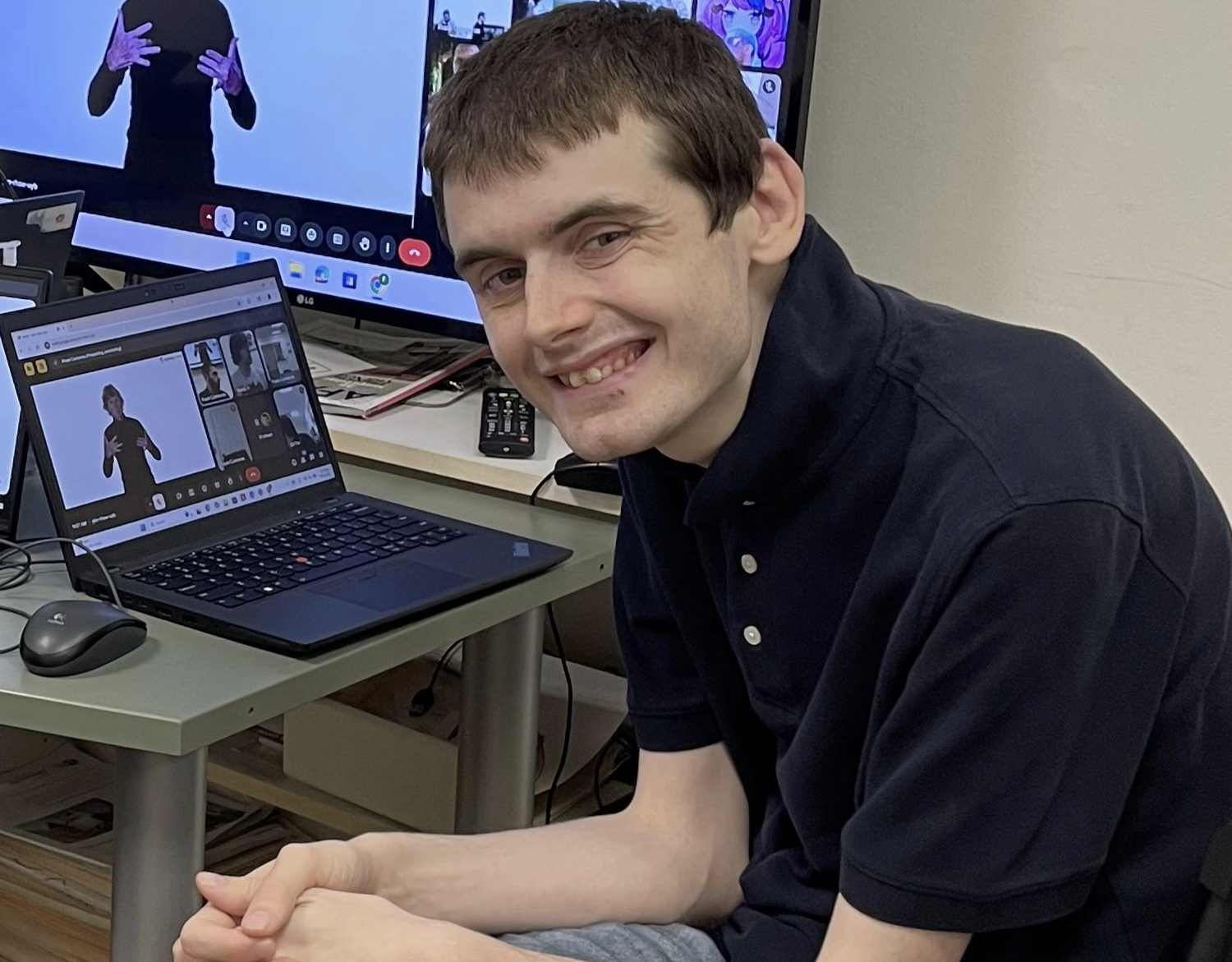
"Those that are non-speakers, you could just see them start to blossom, because they were not being judged by their ability to talk, they were judged by their ability to communicate”.
– Don Drum, parent
WHAT IS IT?
What Is Echolalia?
Echolalia is the repetition of words, phrases, or sounds that were heard previously. It is one of the most widely recognized speech patterns associated with autism spectrum disorder (ASD), though it also appears in other developmental and neurological conditions.
Rather than being random "noise," echolalia is often a purposeful communication strategy. Many autistic individuals use it to express needs, manage anxiety, process language, or connect with others — especially when spontaneous language is difficult.
"Echolalia is not a sign of inability, it's a sign that communication is happening. The question is how to help it flourish."
For families navigating this with an adult child, understanding echolalia is the first step toward better communication, deeper connection, and real independence.
Communication is Always Present
Echolalia is a form of communication, not an absence of it
TYPES & PATTERNS
The Two Main Types of Echolalia
Recognizing which type your adult child uses most can unlock better support strategies and more meaningful interactions.
Type 1
Immediate Echolalia
Immediate echolalia occurs right after hearing a word or phrase. For example, if you ask "Do you want lunch?" and your adult child responds "Do you want lunch?" that's immediate echolalia. It can signal agreement, confusion, processing time, or simply a learned response to fill conversational space.
Type 2
Delayed Echolalia
Delayed echolalia involves repeating phrases heard hours, days, or even years earlier; often from TV shows, movies, books, or past conversations. These "scripted" phrases may seem out of context but often carry deep personal meaning. A phrase from a favorite show may be a genuine expression of emotion or need.
Type 3
Functional vs. Non-Functional
Echolalia can be functional (serving a communicative purpose) or non-functional (seemingly automatic). Trained communication specialists can help distinguish between the two and develop strategies to expand functional communication while honoring the individual's natural style.
IN CHILDHOOD
How Echolalia Appears in Children with Autism
In younger children, echolalia is often the first sign that language development is taking a different path. It can be alarming to parents who expect typical back-and-forth conversation, but it's also a powerful indicator of language potential.
- NRepeating entire TV show scripts or songs
- NEchoing questions back instead of answering them
- NUsing memorized phrases in new situations
- NDifficulty initiating conversation independently
- NUsing echolalia to self-regulate or soothe
- NStrong memory for overheard language
Early speech therapy and AAC (Augmentative and Alternative Communication) tools can help children expand beyond echolalia, but many reach adulthood still relying on these patterns, often without adequate support.
IN ADULTHOOD
Echolalia in Adults with Autism
Echolalia doesn't simply "go away" when a child becomes an adult. For many autistic adults, it evolves, becoming more sophisticated, more intentional, and more deeply woven into their identity and communication style.
- NUsing scripted phrases from media in conversation
- NRepeating questions or statements as a processing strategy
- NDelayed echolalia during times of stress or excitement
- NChallenges in workplace and social communication
- NDifficulty being understood by new people or employers
- NRisk of social isolation when communication isn't supported
Adult programs specifically designed to support expressive communication, like those at JoyDew, can make a transformative difference in your adult child's independence and quality of life.
1 in 36
Children identified with autism in the US
~80%
Of autistic individuals have communication challenges
85%
Of adults with autism are under- or unemployed
100%
Of JoyDew members have a personalized communication plan
The Transition Gap
Most autism services focus on children, leaving adults with few specialized options
The problem
Why Adults with Echolalia Are Often Left Behind
The overwhelming majority of autism research, funding, and programming focuses on children. When those children grow up, there is often a dramatic "services cliff", support drops away just when adulthood brings new social, vocational, and communication demands.
Adults with echolalia face unique challenges in the workplace, in independent living, and in forming meaningful relationships. Without the right environment and communication support, isolation is common.
JoyDew was founded specifically to address this gap. Created by parents of autistic adults who lived this reality firsthand, we built the program we wished had existed.
Our approach
How JoyDew Supports Adults with Echolalia
We don't try to eliminate echolalia, we help your adult child use it as a foundation for richer, more confident communication.
Individual Communication Assessment
We meet every member where they are, mapping their unique communication patterns, triggers, and strengths before any program begins.
AAC & Expressive Tools
From high-tech devices to low-tech visual supports, we match each member with tools that expand their voice, not replace it.
Real-World Communication Practice
Community outings, employment prep, and social activities give members daily, meaningful practice in genuine interactions.
Family Training & Collaboration
We equip families with strategies to extend communication support at home, so progress isn't lost between program days.
WHAT'S INCLUDED
A Whole-Life Solution.
Not Just Communication Therapy
Supporting expressive communication is at the heart of everything we do, woven through every program we offer.
Day Program
A structured, enriching daily program where communication goals are embedded into every activity, outing, and social interaction.
Employment & Job Training
We prepare members for real jobs in the community, with communication coaching tailored to workplace settings and employer relationships.
Higher Education
College-level coursework adapted to each member's learning style, with support for the communication demands of academic settings.
Smart Housing
Supportive residential options where trained staff understand echolalia and other communication style, no translation needed.
Social Life & Community
Friendships, events, and social activities in an autism-friendly environment where every communication style is welcomed and respected.
Parent Support & Education
Workshops, support groups, and one-on-one consultations to help you understand your adult child's communication, and your own needs too.
TAKE THE NEXT STEP
Your Adult Child Deserves More Than Just Care
If your adult child uses echolalia and you're looking for a program that truly understands them, JoyDew was built for your family.
Serving NJ families in Bergen, Essex, Morris, Passaic, Hudson & Union counties · (201) 444-6409