A whiteboard is one of the most underrated communication tools available…simple, flexible, and immediately accessible. When used thoughtfully, it can open meaningful dialogue with non-speaking autistic individuals.
Here's how to make the most of it.
Keep it visual and simple. Write one word or short phrase at a time. Avoid cluttering the board with too much text. Pair words with simple drawings or symbols when possible, visuals can bridge gaps that words alone cannot.
If possible, write the question or message, don't just say it. Many non-speaking autistic individuals are strong visual processors. Seeing the words written out gives them time to process the message at their own pace, reducing pressure and increasing comprehension.
Give options when you can. Instead of open-ended questions, offer written choices. For example, write "Hungry?" and below it: "Yes / No / Not sure." Limiting the response field reduces cognitive load and makes participation easier.
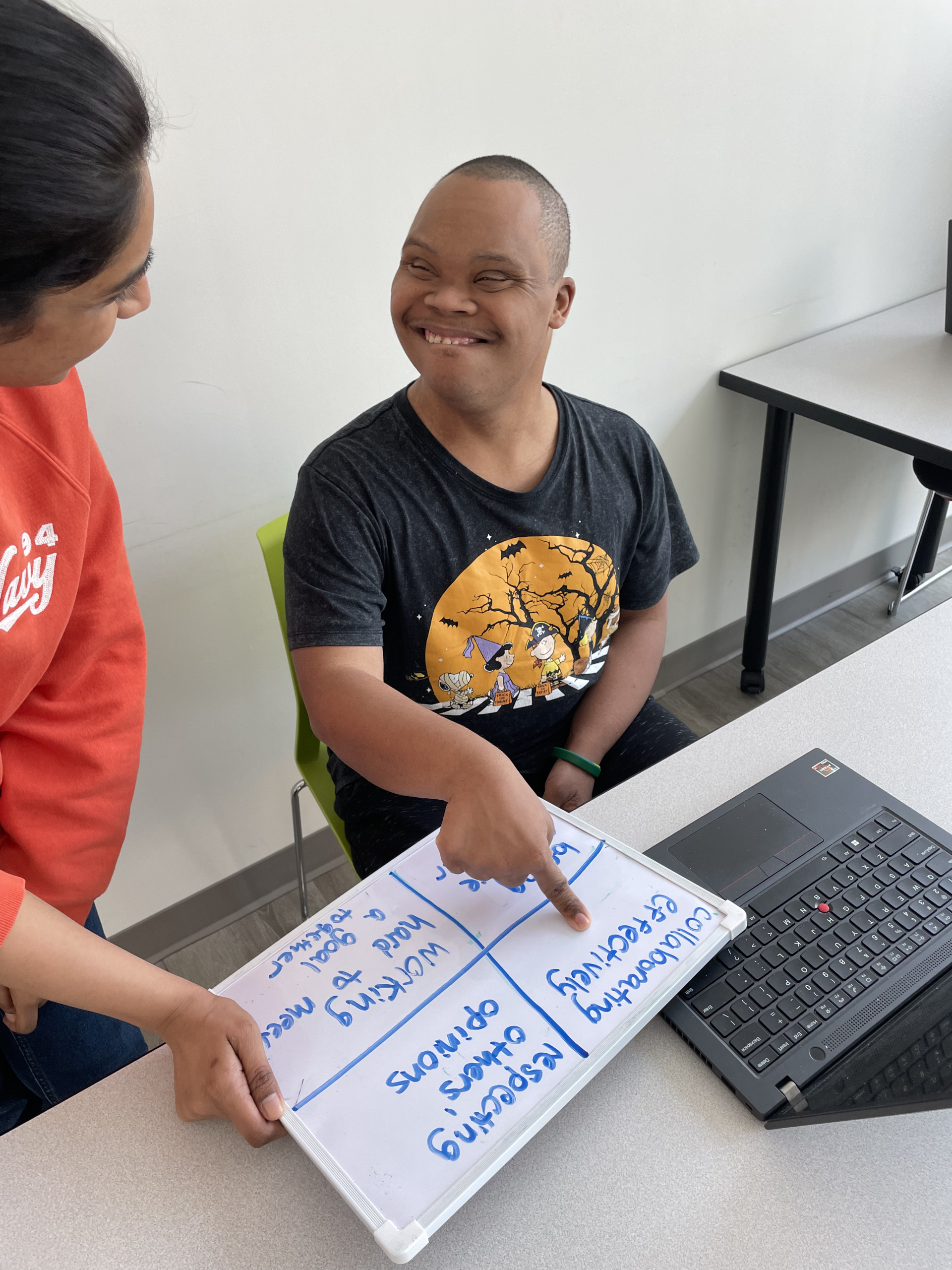
Use the board collaboratively. Hand them the marker. Invite them to write, draw, point, or circle. Communication is a two-way street - the whiteboard should belong to both of you, not just you.
Erase and reset without frustration. The beauty of a whiteboard is that nothing is permanent. If something isn't landing, wipe it clean and try a different approach.
Be consistent. Using the same board in the same space builds familiarity and routine, both of which support communication for many autistic individuals.
The whiteboard isn’t a perfect communication tool, but in the right moment it can be exactly the right bridge.